


Quiet Luxury: the return of monolithic surfaces
At the World Architecture Festival 2025, the Santo Redentore Church in Tenerife was named Building of the Year—an innovative work distinguished by its dramatic use of light and materials. Its massive, raw form, inspired by the surrounding volcanic landscape, stands in deliberate contrast to the neighborhood, becoming both a visual landmark and a gathering place for the community.
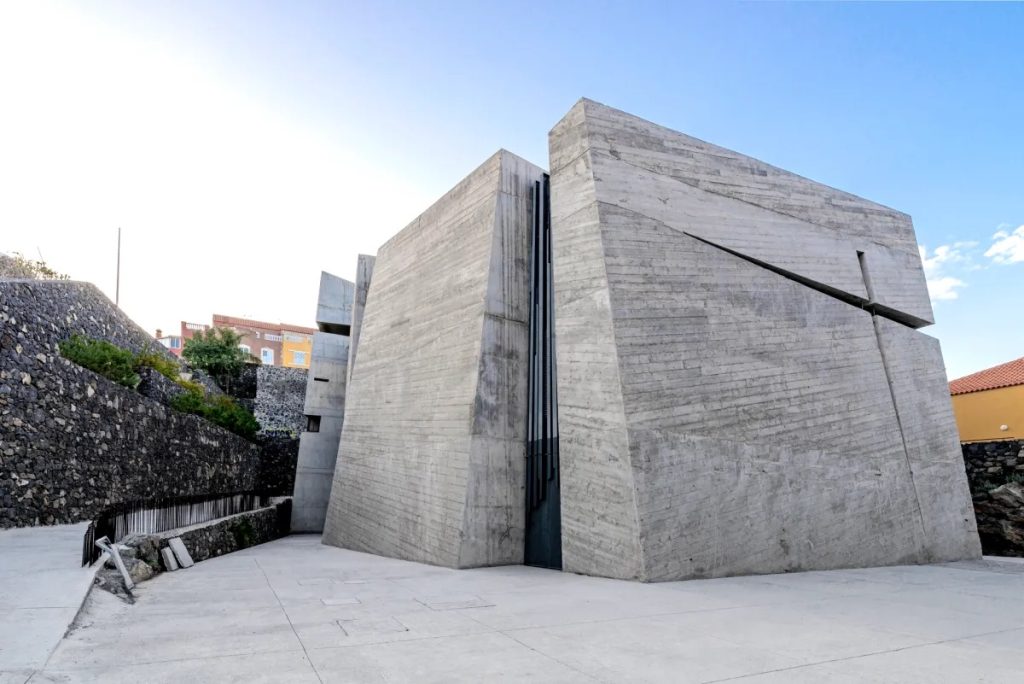
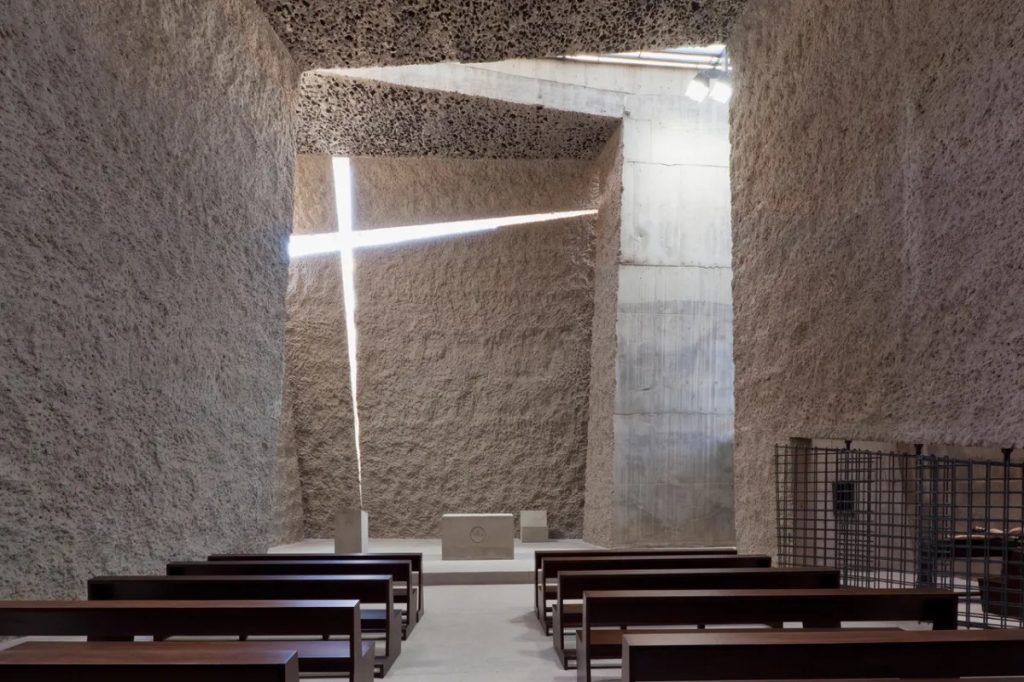
Here, the leading material is concrete mixed with volcanic stone: a choice that goes beyond aesthetic minimalism to honor the power of matter itself.
We start from this example to introduce a trend set to define 2026—and one we feel especially close to: a return to extreme, almost monolithic minimalism, where materials themselves tell the story. This is where Quiet Luxury comes in.
What is quiet luxury?
Quiet Luxury favors restraint. It’s not only about removing the superfluous, but a philosophical and aesthetic approach: reducing elements to the essential and choosing with care what remains.
It doesn’t need redundant ornament; it lets materials, craftsmanship, and functional design do the talking.
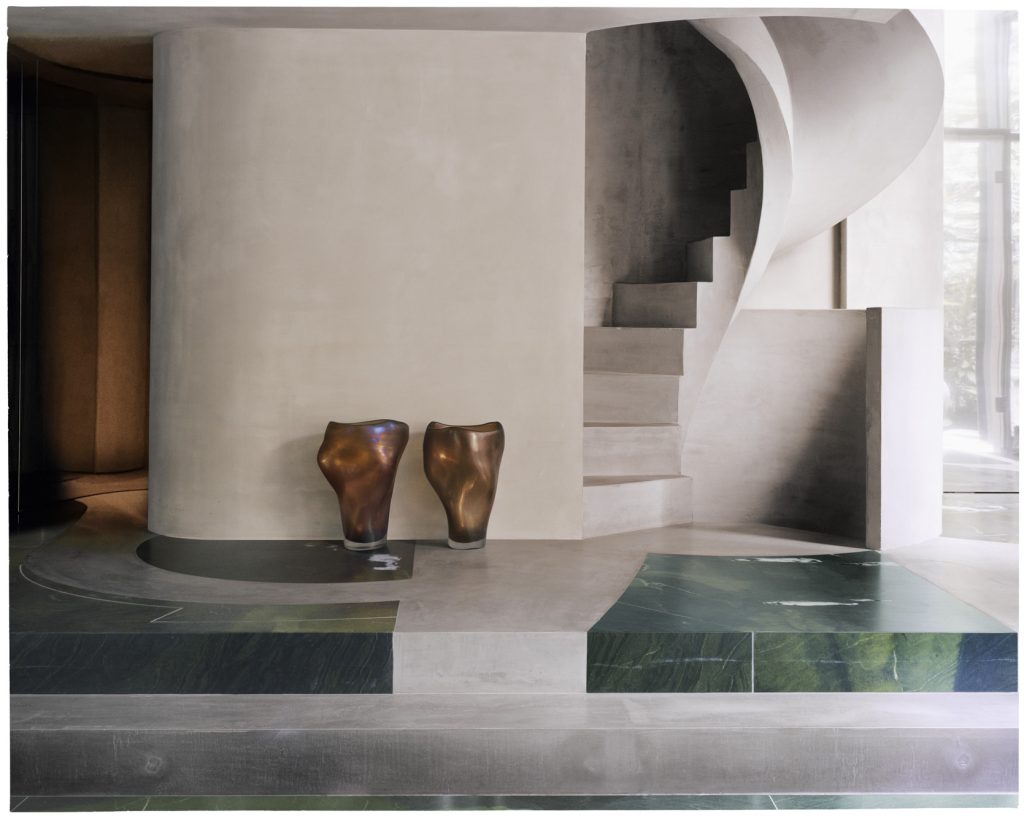
Behind its resurgence lies a widespread desire for calm and refuge—spaces that shield us from everyday visual overload. We feel the need to “turn down the volume” and rediscover authenticity through materials. We return to valuing noble imperfection: natural veining, stone irregularities, surfaces that bear the mark of time.
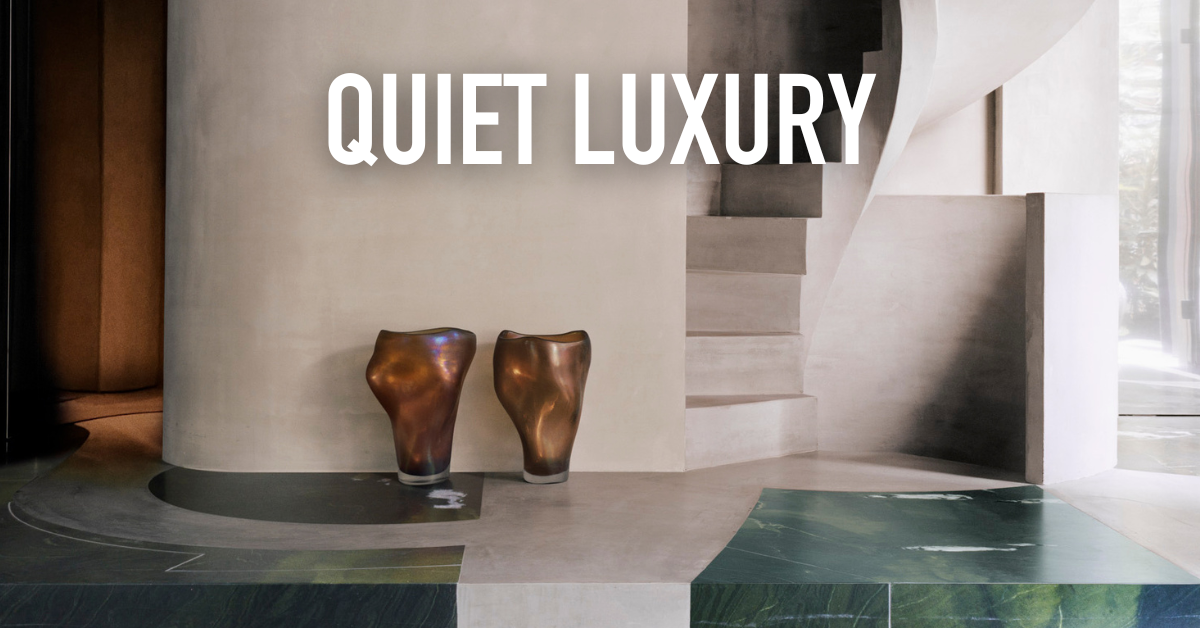
New technical possibilities encourage large formats, precise cuts, and minimal visual interruptions. Design follows a logic of continuity: more practicality, less fragmentation, more space for the material. The monolithic surface becomes today’s answer to the need for order—a single, clean, decisive gesture.
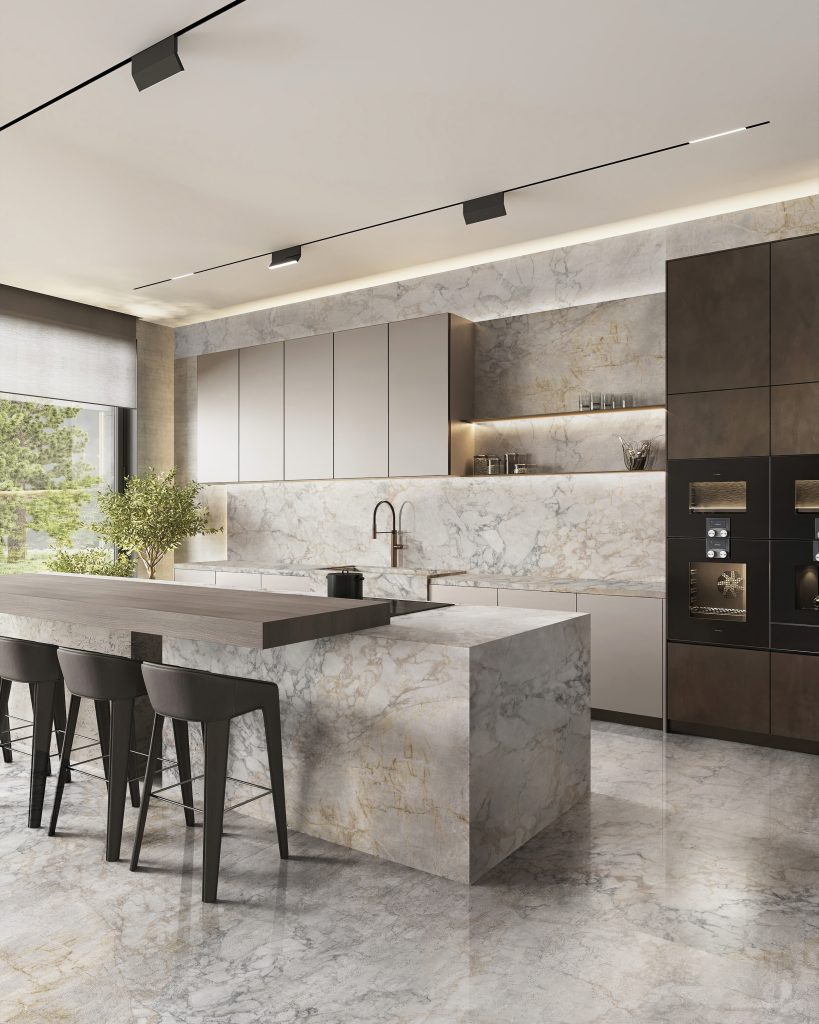
Monolithic surfaces in interior spaces
By monolithic surfaces we mean claddings defined by continuous fields with few visible joints.
In interior design, that translates to walls, floors, worktops, and coverings that feel carved from the same substance—as if the space were modeled from a single block.
Perceptually, this solution amplifies light, visually expands rooms, and helps create calmer, more relaxing atmospheres.
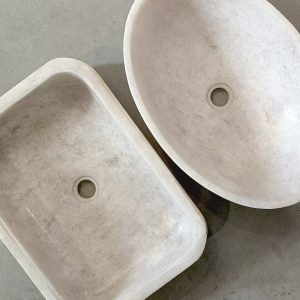
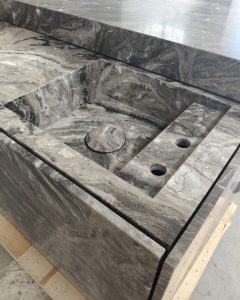
In this context, marble is one of the most compelling materials to interpret the trend: it can be worked as solid mass—carving entire blocks—or cut into large slabs to explore vein matching and continuity.
Natural stone: the true material of quiet luxury
In the pursuit of uniqueness and material presence, marble answers both.
Every slab is unrepeatable—shaped by its veining, color nuances, and internal movements. That very uniqueness is the most authentic expression of luxury.
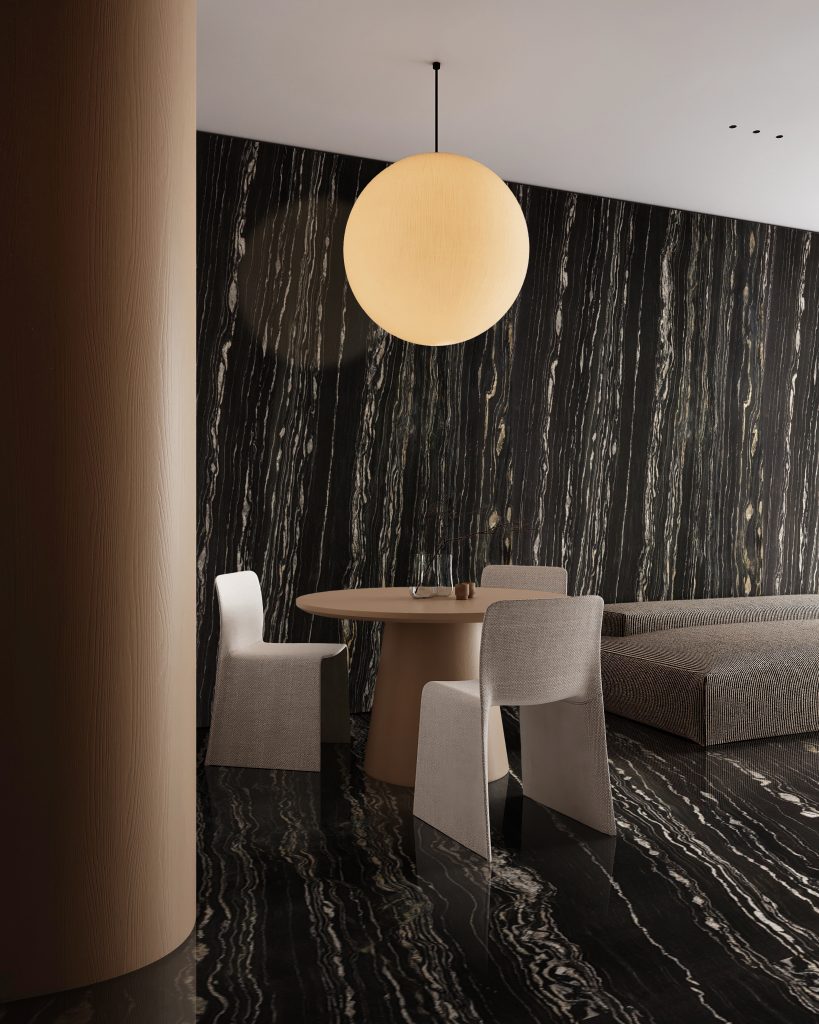
Marble shows its elegance and material strength at their highest in large formats. Whether through bookmatching or meticulous vein matching, the monolithic effect becomes a natural choice for anyone seeking a quiet-luxury environment.
The ability to customize slabs with different finishes also lets you shape the perception of space through lighting.
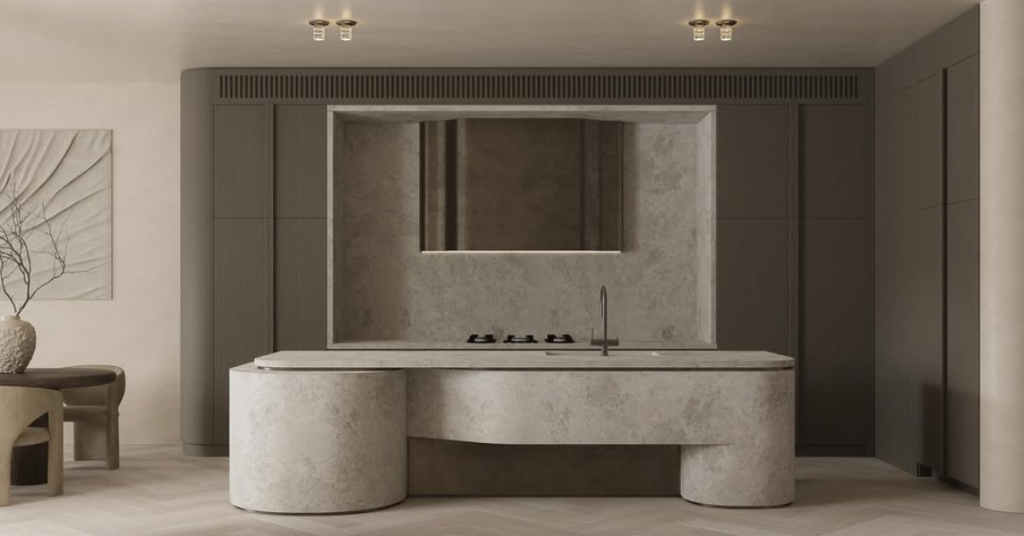
One example is backlit stone, which enriches and elevates interiors with a result that’s striking yet always elegant. Backlit marbles and onyx are particularly suitable in both residential and public spaces—on vertical walls, flooring, and furniture surfaces.
The strength of a Quiet Luxury interior lies in a conscious design gesture and in choosing the right material.
Bold decisions—a statement slab, a continuous surface, a dominant vein—give spaces that sense of discreet luxury so sought after today.
If you want to understand which material will best interpret Quiet Luxury in your project, make the choice in person. Visit our showroom in Domegliara (VR) to view available slabs and imagine your next space together.
No Comments